A Guide To Types of Coffee Roasts: Does It Really Matter?

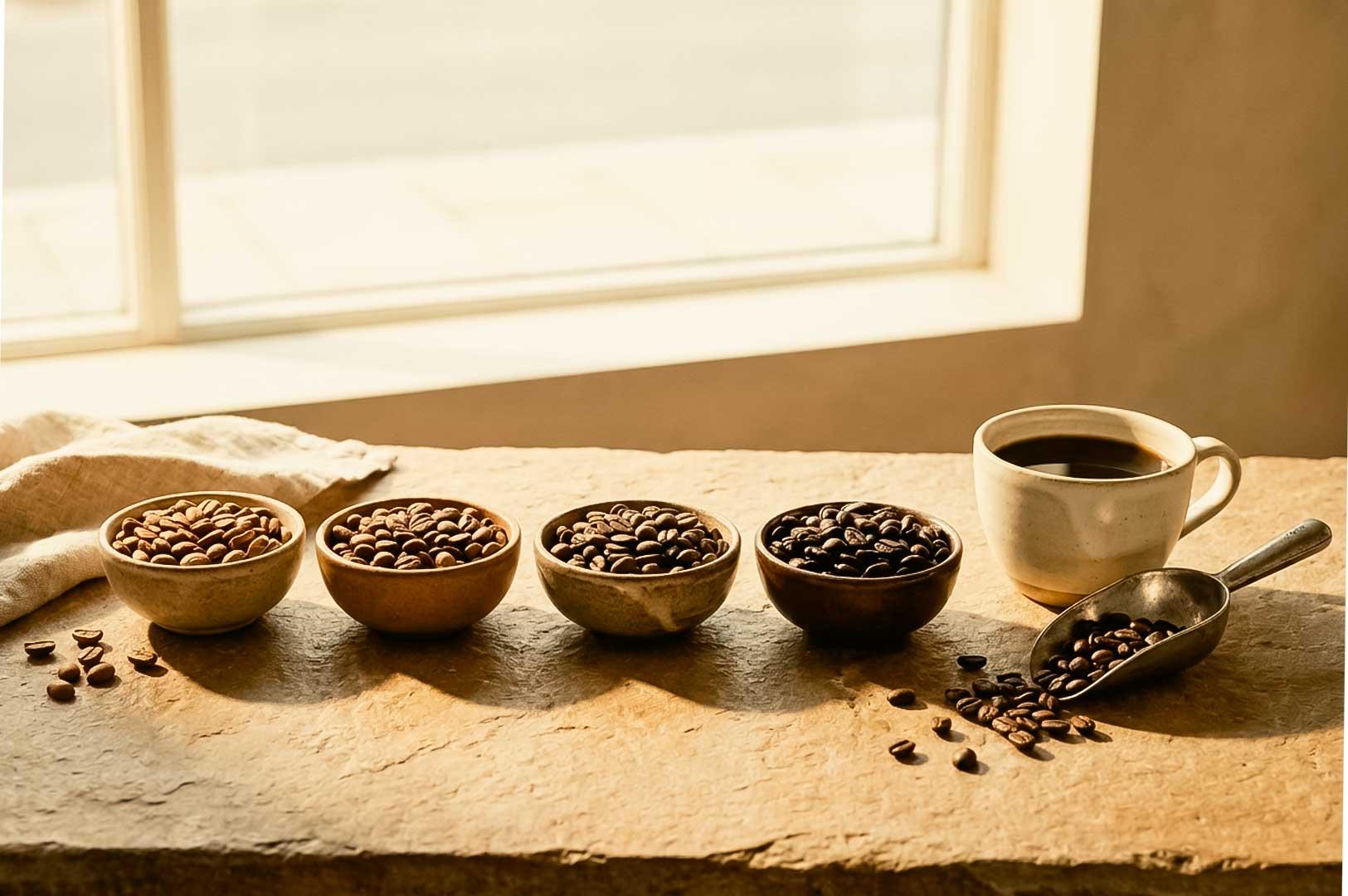
Have you ever wondered why some coffee drinks taste rich and smoky, while others have surprisingly fruity or floral notes?
For many coffee lovers, the difference comes down to more than just how the coffee is prepared. The types of coffee roasts play a significant role in developing the aromas and flavours we experience when drinking coffee. A light roast might reveal nuanced flavors and delicate acidity, while a darker roast can bring out a bolder, more pronounced smoky taste.
But does a darker roast necessarily mean better coffee? And how does roasting affect the balanced flavor profile of your favourite cup?
We’re taking a closer look at how different roast levels influence brewed coffee, what makes each one distinct, and why understanding them might change how you choose your next cup.
What Happens During Coffee Roasting?
Every coffee starts as green coffee beans. They’re dense, grassy-smelling and nothing like the brown beans you’d recognise. Roasting transforms these raw beans into the aromatic coffee we’re familiar with.
The roasting process happens in several stages, each contributing to the coffee’s final flavour and aroma.
01 → Drying
The green beans gradually lose moisture as they heat up, preparing them for the changes ahead.
02 → Browning
As the beans turn brown, chemical reactions develop the aromas and flavours we associate with roasted coffee.
03 → First Crack
The beans expand and make an audible cracking sound, a little like popcorn. This marks an important stage in roast development.
04 → Development
Roasting continues, influencing the coffee’s sweetness, acidity and body. This is where the final roast profile takes shape.
05 → Second Crack
A second series of cracking sounds may occur as roasting progresses into darker roast levels.
06 → Cooling
The beans are cooled rapidly to prevent further roasting and preserve their intended flavour.
You might also come across charts showing exact roasting temperatures for each stage, but these are best treated as rough references. Temperatures vary between roasting machines, batch sizes and probe positions, so the same numbers won’t necessarily apply across different roasters.
Understanding the Different Types of Coffee Roasts
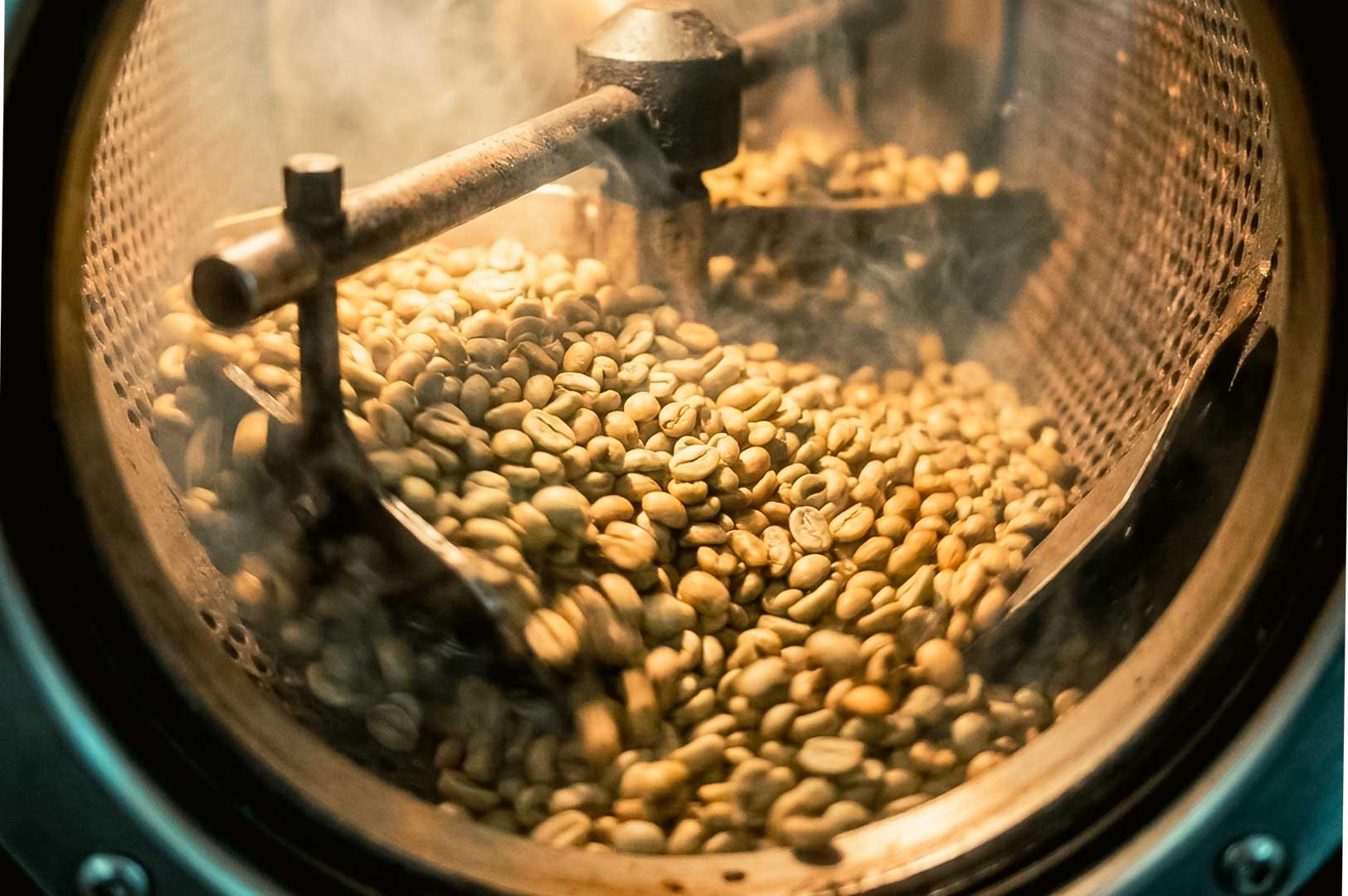
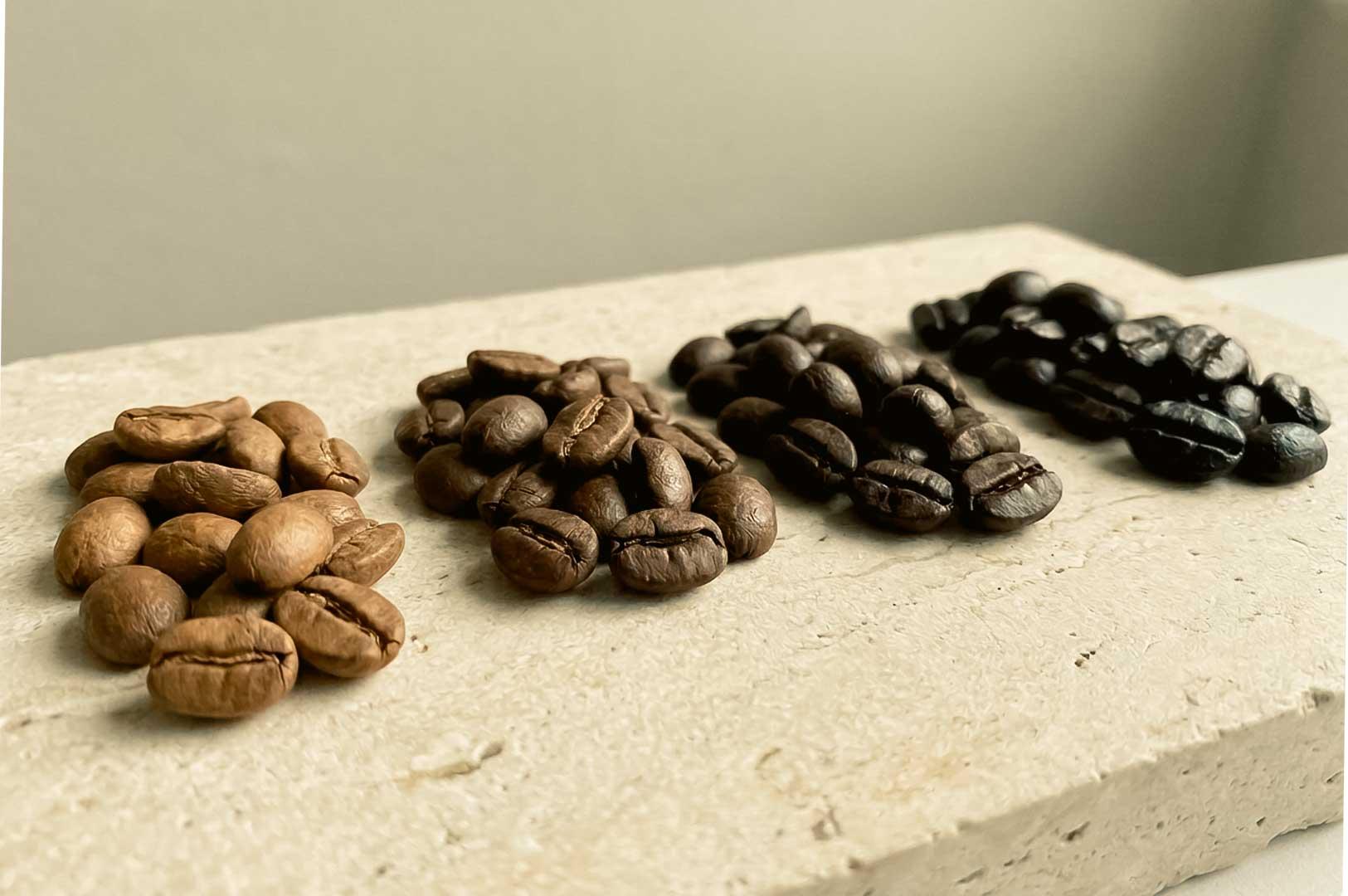
Most people are familiar with three roast levels: light, medium and dark. But there are actually four main types of coffee roasts you’ll commonly come across, including medium-dark. Each brings something different to the cup, from bright, fruity flavours to deeper, roasted notes.
Light Roast Coffee
Light roast coffee has a light brown colour and a dry surface. It’s often associated with fruity, floral or citrusy flavours, along with bright acidity. This is where the coffee’s natural origin flavours tend to be more noticeable. Light roasts are particularly popular for filter coffee and pour-over, where their more delicate characteristics can be appreciated.
Medium Roast Coffee
Medium roast coffee is medium brown, usually with a dry surface. It often has a pleasant combination of sweetness, nuttiness and chocolatey notes, balanced by moderate acidity and a medium body.
For anyone who enjoys a balanced flavour without too much bitterness or acidity, medium roast is a good place to start. It’s also versatile enough for drip coffee, espresso and everyday brewing.
Medium-Dark Roast
A medium-dark roast has a deeper brown colour, sometimes with a slightly oily surface. Its flavour profile leans towards dark chocolate, caramel and bittersweet notes, with more noticeable roasted characteristics.
It’s a popular choice for milk-based drinks such as lattes and flat whites, as the richer flavours often pair nicely with milk.
Dark Roast Coffee
Dark roast coffee ranges from dark brown to nearly black, and the beans may have a noticeably oily surface. Expect deeper roasted flavours, often with smoky, bittersweet or dark chocolate notes.
Dark roasts appeal to coffee drinkers who enjoy a bold, pronounced roasted flavour. They’re also closer to the deeply roasted taste many Singaporeans associate with traditional kopi, although the roasting methods and beans used can be quite different.
Coffee Roast Levels: How Much Does It Really Change?
These are tendencies, not rules. The same label can taste quite different depending on the beans and the roaster.
|
Roast Level |
Color |
Typical Flavors |
Acidity |
Bitterness |
|---|---|---|---|---|
|
Light |
Light brown, dry |
Fruity, floral, citrus |
High |
Low |
|
Medium |
Medium brown, dry |
Nuts, chocolate, caramel |
Moderate |
Moderate |
|
Medium-dark |
Darker brown, slightly oily |
Dark chocolate, caramel, bittersweet |
Lower |
Moderate to high |
|
Dark |
Dark brown to near black, oily |
Toasted, smoky, bitter |
Low |
High |
Why Do Coffee Roasts Have So Many Different Names?
Not every coffee bag uses familiar labels like light, medium or dark roast. Some feature traditional names such as City Roast, Vienna Roast or French Roast, which can make choosing coffee a little confusing. These names have been used to describe different coffee roast levels, although their meanings aren’t always consistent.
|
Roast Name |
Approximate Level |
What It Means |
|---|---|---|
|
Cinnamon Roast |
Very light |
Named for its light brown colour, not its flavour. |
|
City Roast |
Typically medium |
Commonly associated with roasting around first crack. |
|
Full City Roast |
Typically medium-dark |
More developed than City Roast, with deeper roasted notes. |
|
Vienna Roast |
Medium-dark to dark |
Often associated with roasting near or into second crack. |
|
French Roast |
Dark |
Known for pronounced roasted flavours. |
|
Italian Roast |
Very dark |
Associated with deep, intense roasted characteristics. |
Other names you might encounter include American Roast, Half City, Light City, New England Roast and Continental Roast. These classifications aren’t standardised, so one roaster’s City Roast might look and taste different from another’s. Interestingly, French and Italian roasts refer to roasting styles, not where the coffee beans were grown.
Which Roast Beans Really Have More Caffeine?
Everyone would probably guess that dark coffee roast had the most caffeine. It tasted stronger, so it had to be, right?
Well, not quite. Bitterness and caffeine content are different things. A smoky, intense cup can carry the same caffeine as a bright, delicate one, or even less.
Weight vs. Volume
Roasting changes a bean’s density and size. That’s where the confusion comes from.
By weight: Light and dark roasts generally contain similar amounts of caffeine, although darker roasts may have slightly higher concentrations per gram because roasting reduces bean mass.
By scoop: Light roast may have slightly more caffeine, because denser beans pack more coffee into each scoop.
In the cup: Dose, brewing method and serving size matter most.
So a flat white made with medium roast might taste richer than a light-roasted filter coffee. But the filter cup could hold more total caffeine, simply because it’s larger and uses more coffee. If caffeine is what you’re after, look at how much coffee goes into your drink. Roast color won’t tell you much.
Match Your Brewing Method
Drip coffee and pour-over: Light to medium roasts show off delicate notes.
French press: Medium to dark works well. Grind size and steeping time matter.
Espresso machine: Medium to dark roasts extract easily, but light espresso is possible.
Cold brew: Any roast works. Each gives a different result.
Milk-based drinks: Medium to medium-dark tends to pair nicely with milk.
A Few Coffee Mix-Ups We’ve All Heard Before
Even with a better understanding of coffee roasts, a few common assumptions can still lead to disappointing cups.
Choosing Beans Based on Caffeine Alone
It’s easy to assume light roast contains more caffeine or that dark roast is automatically stronger. But choosing beans based on caffeine alone can mean overlooking the flavours you actually enjoy. If chocolatey, nutty coffee is more your preference, tasting notes are a better place to start.
Blaming the Roast When It’s Actually the Brewing
Sometimes, the problem isn’t the beans but how they’re brewed. If a light roast tastes overly sour, a slightly finer grind may help. If a dark roast tastes harsh or bitter, try a coarser grind or lower water temperature. And if medium roast tastes weak, check the coffee-to-water ratio before switching beans.
Overlooking the Tasting Notes
Descriptions such as strawberry and jasmine don’t mean those ingredients have been added to the coffee. They describe flavours and aromas naturally associated with the beans. Paying attention to these notes can make choosing your next coffee much easier.
The next time you’re at a café, try asking the barista one simple question: “Is your espresso more chocolatey or fruity?” It’s often a more useful starting point than asking whether the beans are light or dark roasted.
Espresso Roast Doesn’t Always Mean Dark
Here’s an interesting example right from Singapore. Common Man Coffee Roasters offers two espresso blends with very different flavour profiles. Daily Driver features notes of cocoa, roasted nuts and caramel, while Lucky Basterd leans towards florals, blueberries and tropical fruit.
Both are marketed as espresso roasts, yet they offer two very different coffee experiences. It’s a good reminder that the term espresso roast doesn’t necessarily tell you how a coffee will taste.
A Little More to Every Cup
From the bright, complex flavors of lightly roasted arabica beans to the bold flavor and occasional smoky flavor of darker roasts, there’s plenty to appreciate about how coffee is made. Even names like breakfast roast and light city roast remind us just how varied the world of coffee can be.
Ultimately, there’s no single roast that everyone will enjoy. Some prefer a flavorful coffee with fruity notes, while others are drawn to deeper chocolate or subtle spice notes. The fun is in discovering what suits your taste, one cup at a time.
And that’s something we love exploring as a team. For more café stories, coffee discoveries and places worth visiting across Singapore, there’s always something brewing at Brunch Cafes.
Enjoyed this read?
Give it a like and share it with a fellow brunch lover.